
Browse Items (158 total)
Sort by:
Nureyev's Defection

In June 1961, Rudolf Nureyev, along with other members of the Kirov company, arrived at the Paris airport in order to fly to London, the next stop on their tour. Nureyev however “given a ticket to Moscow and told he was needed for a gala”…
Soloviev's Suicide
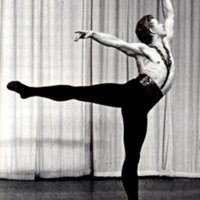
In 1977 the great dancer Yuri Soloviev killed himself. The fact that he killed himself in his beloved dacha makes his death more haunting, for “it is tragic to think that in a dark hour he was drawn back to his roots” (Lobenthal 55). Though the…
Lopatkina's Injury

In 2001, Ulyana Lopatkina suffered a serious injury that forced her to stop dancing for two years, during which time she married and had a daughter. Interestingly, it was Mikhail Baryshnikov—one of the greatest ballet dancers alive and a former…



Russian Bond Certificates
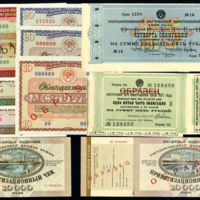
This is an image of various Russian bond certificates over time. After purchasing a bond, an investor would receive a certificate like this. The image includes bond certificates issued by the Imperial government, the Soviet government, and by the…
Domestic Ruble-Denominated Debt
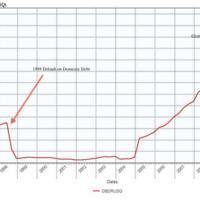
This is a chart of the ruble denominated debt in Russia. It includes sovereign, municipal, and corporate debt. The scale on the right is billions of USD. The large run up in 1998 is of sovereign debt, which goes back to almost zero when the Russian's…
Russian 10 Year Ruble-Denominated Bond
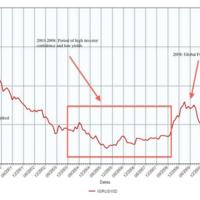
This chart shows the yield of the 10 year ruble denominated bond. The yield on this bond spiked during periods of uncertainty such as 1998 and 2008 and declined in periods of optimism. The yield was particularly low between 2003-2008.
Russian Ruble-Denominated Corporate and Municipal Bond Yields
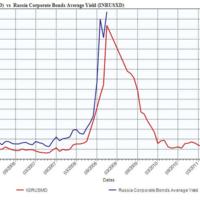
This chart shows the yields of Russian ruble-denominated corporate and municipal debt. Both issuances started around 2003. From around 2003-2008, yields on municipal and corporate bonds declines by almost 50% from almost 12% per year to around 6% by…
Nominal Ruble Exchange Rate
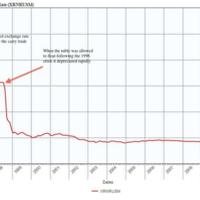
This is a graph of the nominal ruble exchange rate over time. The ruble starts at the strongest level and depreciates over time. When the ruble was first allowed to float in 1998, it depreciated by 75% before stabilizing. The ruble depreciated again…
Timeline sample
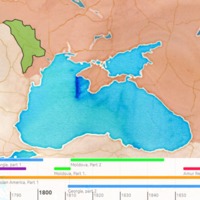
Screenshot of the Unit 1 timeline
GKO Yields
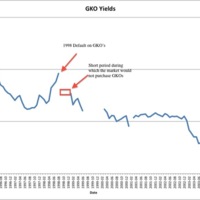
This chart shows the yields (on an annually adjusted basis) of Russian short-term, ruble-denominated bonds, called GKO's. During the mid-90s, foreign investors poured money into GKO's driving yields down from over 100% in 1995 to as low as 17.2% in…