
Faces of Ballet, Faces of Russia
For many reasons the Mariinsky [Kirov] Ballet is an excellent lens through which to view the evolution of “Russianness” as it is exemplified, commodified and even subverted through the medium of ballet. Perhaps the most obvious reason that the Kirov[†] serves as a useful framework with which to construct an understanding of “Russianness” is that the Kirov has thrived nearly continuously since its origins in the tsarist moment of 1738, when it was known, as it is now, as the Mariinsky Ballet. The Kirov was renamed, resurrected and reimagined—much like the symbolic phoenix—during the Soviet period when it came under state control. Today, the Kirov remains “probably the most famous ballet company in the world” (Crompton). Examining the complex and captivating questions surrounding the definition of Russianness proves particularly fruitful when using the lives of Kirov dancers Rudolf Nureyev, Yuri Soloviev and Ulyana Lopatkina as a kind of “micro-lens.” Thus, the Kirov ballet can used as a kind of dual framework for studying Russianness; on a broad level, the Kirov ballet exists as a polished, holistic company that works to present a very formalized idea of Russianness, and on a micro level the lives and loves of individual Kirov dancers provide grittier examples of the reality of Russianness and its implications in day-to-day life. When one employs the “Kirov lens” in this dualistic way, a picture of Russianness emerges that is defined by its qualities of lofty aspiration, inexhaustible determination, harsh sacrifices, and a deep and throbbing sadness that runs through the history of the Kirov and, perhaps, through the history of Russia at large.
The Kirov Ballet is defined by an “almost religious devotion” to the art of ballet (Crompton). Yuri Fateyev, the current Director of the ballet, sums up the collective spirit of the company quite succinctly and charmingly: “This company is a classical ballet company. Classical dancers can dance everything: they can dance characters, they can act, they can do the modern. But there is absolutely nothing in the opposite way, because the classical dancer is the highest-quality dancer in the world” (Fateyev qtd. Compton). Indeed, the Kirov Ballet has long been a bastion of classical ballet in a city [St. Petersburg] that is itself a “citadel of culture” (Gregory and Ukladnikov 7). The Kirov’s commitment to classical ballet training has produced “almost every ballet dancer famous enough to become a household name,” including Vaslav Njinsky, Rudolf Nureyev, Natalia Makarova, and Mikhail Baryshnikov (Roy). Examining the Kirov as a holistic company highlights a staple of Russian identity: a, sometimes rabid, determination to achieve great feats. The Kirov prides itself on “presenting the world with a plethora of great artistes” (“Mariinsky Theatre”). This quotation comes directly from the company’s official webpage and the rhetoric here is interesting to note. The Kirov produces not just artists but artistes. Furthermore, the Kirov is gracious enough to bestow the cultural fruits of its ceaseless labor on the entire world, rather than merely Russia proper. Thus, the macro component of this “Kirov lens” demonstrates a preoccupation of the Russian imagination with the lofty goal of achieving never-before-seen feats—in this case, producing the absolute best ballet dancers in the world.
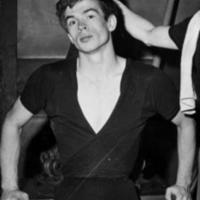
This drive to achieve greatness can also be seen manifested in the lives of some of the Kirov’s best dancers: Rudolf Nureyev, Yuri Soloviev and Ulyana Lopatkina. Yet, the individual trajectories of these individuals, each a comet in his or her own right, reveal subtler and perhaps more heart-rending shades of the idea of Russianness, namely an admirable—thought perhaps not quite enviable—sense of determination, a capacity for sacrifice, and a deep, pervasive sense of melancholy. First, we examine Rudolf Nureyev. Nureyev was “a transformative figure, the greatest male ballet dancer of his time,” and the gem of the Kirov Ballet (Smith). However, in 1961, when he was touring with the company in Paris, Nureyev defected to the West despite the efforts of the KGB to prevent such a drastic decision—tactics which included insisting that Nureyev return to the USSR because Khrushchev wanted him to dance in a special gala as well as informing Nureyev that his mother had fallen ill (Smith). After his defection Nureyev went on to receive asylum in the West and have a brilliant career, but “in absence he was sentenced to prison” by the Soviet government (“1961—Nureyev Defects”). Thus, Nureyev’s defection demonstrates a great personal sacrifice tinged with a heavy sense of sorrow. [Click here to see a video of Nureyev dancing.]
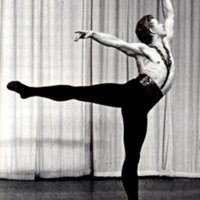
Next, we turn to the life of another Soviet male dancer: Yuri Soloviev, nicknamed “Cosmonaut Yuri” for “the sheer height of [his] flights, [which] were combined with a softness, clarity, and ballon seemingly defying gravity” (Whitlock). Soloviev became a celebrated star dancer in his time with the Kirov. Indeed, when compared with Rudolf Nureyev “for many Russians, Soloviev remains the greater dancer” (Kisselgoff 30). Yet, there was always “a dark joyousness” in his dancing, and this dark quality was expressed as a “curious sense of pain in his dancing that revealed itself so clearly in his tormented and passionately portrayed performance[s]” (Barnes). Ultimately this darkness consumed Soloviev, who killed himself at the age of 37. Strangely, the reasons surrounding his suicide still remain murky. The best guesses as to the forces that drove Soloviev to kill himself are that he “was never a member of the Communist party, which perhaps caused him some difficulties” and that “he was essentially the kind of dance perfectionist for whom increasing age can be an unnatural burden” (Barnes). The vagueness around the reasons for Soloviev’s death add an increased sense of gloom to, as well as a complicate the concept of Russianness by suggesting that there is a certain “unknowable” inherent in the Russian soul. Furthermore, if we accept that one of the things that drove Soloviev to suicide was the fact that he could no longer dance in a way that met his own standards, we can see how Soloviev’s suicide demonstrates the ideas of grand—often unattainable—goals as well as the concept of deep personal sacrifice that are part of the idea of “Russianness” presented in this paper. [Click here to see a video of Soloviev dancing.]
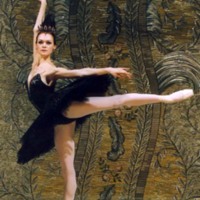
Finally, we examine the present moment, specifically the life of prima ballerina Ulyana Lopatkina, one of the Kirov’s principal dancers today. Lopatkina has ascended to the status of “national legend” in Russia and, because of her impressive height and “man-sized feet,” is affectionately referred to as “the beanpole who became the soul of Russia” (Brown). Lopatkina is also considered to be “a perfect example of the Russian school with willowy limbs, steely strength and a classical purity of line, as well as instinctive musicality” (Yudina). From the time of her acceptance into the Kirov at the age of 17, Lopatkina rapidly ascended through the ranks of the Kirov dancers, but in 2001 she “faced a major setback – a lingering leg injury forced her to take a sabbatical, then surgery” (Hodouchi). However, two aspects are remarkable about the way in which Lopatkina handled this injury. First, while on tour in London in 2001—just as her leg injury flared up—Lopatkina was in so much pain that she “couldn’t even hold a single rehearsal” (Yudina). However, Lopatkina refused to cut short the tour and instead continued to perform, receiving an anesthetic injection before each of her entries onstage. The second impressive aspect about Lopatkina and her injury is that, while on sabbatical Lopatkina married and had a baby—yet she still returned to ballet two years after her surgery. In this way, Lopatkina’s experience of injury and the way in which she fought through it highlights the “grit” of the Russian spirit, as well as a uniquely Russian brand of passionate determination to maintain personal pride and a willingness to make sacrifices in the name of one’s cause. [Click here to see a video of Lopatkina dancing.]
Thus, it is evident that using the Kirov Ballet as a lens for examining the meaning of Russianness proves a fruitful exercise. Using the lives of some of the most famous dancers of the Kirov as “mini lenses” highlights several important themes of the idea of Russianness: a gritty determination and fidelity to both lofty aspirations and personal pride, a willingness and capacity for great sacrifice, and a stately, tormented kind of sadness that permeates this larger sense of “Russianness.” Perhaps one of the best ways to capture this version of Russianness is through an image of the city of St. Petersburg, where the Kirov is located: “Leningrad: the last centre of civilized elegance, built on the edge of arctic seas and frozen swamps—surrounded by lakes and silent forests—standing in the purity of whiteness…” (Gregory and Ukladinov 7). This image is grand, austere, dignified and lonely; it captures the “tragic mien” of not only the city of Leningrad [St. Petersburg], but also that of the Kirov Ballet and many of its dancers—and perhaps of Russia itself.
[†] Please note that, for issues of clarity, this essay, which deals largely with the Soviet context, refers to the ballet theatre in question as the Kirov—as it was then called— rather than using its present-day official name, the Mariinsky Theatre.
[Word Count: 1515]
Works Cited
Barnes, Clive. “Kirov Ballet Beset By Gloomy Days.” The Spokesman Review
[Spokane, WA] 22 Jan. 1977: C17. Google News. Web. 22 Apr. 2014.
Brown, Ismene. “Ulyana Lopatkina: The Beanpole Who Became the Soul of Russia.”
ArtsDesk.com. The Arts Desk Ltd., 9 Jul. 2005. Web. 21 Apr. 2014.
Crompton, Sarah. “Mariinsky Ballet: ‘We Feel Our Work Is Our Life.’” The Telegraph.
Telegraph Media Group Limited, 21 Mar. 2014. Web. 21 Apr. 2014.
Gregory, John and Alexander Ukladnikov. Leningrad’s Ballet: Maryinsky to Kirov.
London: Robson Books, 1980. Print.
Hodouchi, Ayano. “Bliss for Ballet Buffs: Ulyana Lopatkina Presents.” The Moscow
News. The Moscow News, 20 May 2010. Web. 22 Apr. 2014.
Kisselgoff, Anna. “A Magic Trio Revisited: Seeing What the Ballet Legends Were All
About.” The New York Times Dance Reviews. New York: The New York Times, 2001. Print. 30-31.
“Mariinsky Theatre: History of the Theatre.” Mariinsky Theatre. The State Academic
Mariinsky Theatre, 2014. Web. 21 Apr. 2014.
Roy, Sanjay. “Step-by-Step Guide to Dance: Mariinsky (Kirov) Ballet.” The Guardian.
Guardian News and Media Limited, 30 Sept. 2008. Web. 21 Apr. 2014.
Smith, Dinita. “New Light on Nureyev’s Grand Leap to the West.” The New York
Times. The New York Times Company, 6 Oct. 1998. Web. 21 Apr. 2014.
Whitlock, Geoff. “Yuri Soloviev.” For Ballet Lovers Only. N.p., 2009. Web. 21 Apr.
2014.
Yudina, Anna. “Prominent Russians: Ulyana Lopatkina.” Russiapedia. TV-Novosti,
2011. Web. 21 Apr. 2014.
“1961—Nureyev Defects to the West.” Rudolf Nureyev Foundation. Rudolf Nureyev
Foundation, 2012. Web. 21 Apr. 2014.