
A Cold Study: Russia at Harvard

The Problem
As the US entered the Cold War in the post-WWII era 1948, scholar J.A. Posen wrote a piece for The Russian Review, titled “Russian Studies in American Colleges.” Posin wrote this short, yet strong, piece suspicious of the recent spike in interest that American Universities had taken towards Russia since the fall of WWII. Posin was not concerned with the growth in studies of Russian languages and literature, but rather the intersection of Russian studies with American social sciences, namely economics, history, and government. Citing worries regarding the close ties between University, youth, and state, Posin warns against American students studying anything but Russian literature and language. For Posin, these programs in language and literature exist under the “basis of scholarship” rather than “political expediency.”[1] Posin, therefore, defines pure “Russian Studies” as academic work that includes “the language itself, literature in the native tongue, or in English translation, survey courses in civilization or culture, and closely allied subjects.”[2] Posin does not consider an interdisciplinary gaze on Russia to be reflective of “pure” understandings of Russian identity, because “Russian Studies in Social Sciences...have received different treatment in the United States.”[3] Citing the expansive funding that these social science programs have received from sources such as the Department of War and Navy, Posin’s article drips with a fear that these academic endeavors misinterpret and misrepresent Russia to future policy makers. The suspicion voiced in Posin’s article raises relevant questions for this class and Harvard as a whole—are attempts to study Russia from an interdisciplinary, social science perspective at Harvard always driven by American political investments? Are Cold War attitudes inherent in these attempts to understand Russia in the world?
Harvard's Response
As mentioned in the introduction, Harvard’s history in Slavic Languages and Literature extends far before this perceived boom in Russian Studies. Posin references Harvard’s “experimental” program in his article, calling the early stages of the program a “precarious existence”, with a teaching staff of “rarely more than one person.” The same year Posin’s article came out, Harvard’s interests in Russian studies began to extend beyond Russian history and literature, and into the political realm.[4] This was solidified with the founding of the Davis Center for Russian and Eurasian Studies in 1948. According to the Davis Center Website, the Russian Research Center (RRC) at Harvard was founded “with the hopes that the social sciences could collectively address the pressing national need to understand the Cold War adversary.”[5] The language and wording used in this description ("adversary," "pressing national need,") suggests a history of understanding for the sake of self-preservation. Russia became relevant at Harvard primarily as a rival to be understood and manipuated. Though Harvard did begin to Russian studies more attention with the founding of the center, this root of this attention comes not a place of understanding but antagonism. Thus, the era of “Soviet Studies” began.
[1] J. A. Posin, "Russian Studies in American Colleges," Russian Review 7.2, (1948), 63, accessed on May 6, 2014, <http://www.jstor.org/stable/10.2307/125520?ref=search-gateway:62fb7380d153d160210f5198d86dc3bc>.
[4] Though this exhibit focuses on Russia in the social sciences from this point onward, Harvard’s Department of Slavic Languages and Literature was officially established on January 4, 1949—during this post-WWII moment.
[5] "History,"Davis Center for Russian and Eurasian Studies, Harvard University, accessed May 5, 2014, <http://daviscenter.fas.harvard.edu/about-us/history>.
General Education as a Lens
The General Education curriculum is the best contemporary lens with which to view Harvard’s current attitude towards Russia and its relevance towards the world. Professor Louis Menand spearheaded the installment of the General Education program at Harvard by arguing that the purpose of education is simple “to enable students, after they leave college, to make more enlightened contributions to the common good.”[1] Approved in spring of 2007 and in effect fall of 2009, the General Education program is Harvard’s articulation of what the institution feels every student needs to know before they graduate. According to the program’s website, the purpose of the program is to “introduce students to subject matter and skills from across the University, and does so in ways that link the arts and sciences with the 21st century world that students will face and the lives they will lead after college.”[2] Students must be taught how to think about different topics, but also how to apply that method of thinking to the world they will soon interact with. Required courses of Gen-Ed Program change, reflective of the valued ideas of a common culture at the given time. What exactly does Harvard feel its students need to know about Russia in order to be an informed citizen of the world?
The Catalogue
Currently there are four classes (not counting Societies in the World 52) in the General Education catalogue that list “Russia” in their course description. Two of these classes fall under the “Aesthetic and Interpretive Understanding” category, something that would please Posin and calm his woes. Interestingly, the professors who teach both of these courses (“How and What Russia Learned to Read: The Rise of Russian Literary Culture,” and “Art and Politics in Russia and Eastern Europe”) are in both Slavic Langauges and Literature and Comparative Literature departments. Though Posin argues that Russian literature should be studied in its own right, the coupling of departments in this case suggests that a comparative lens may also be important understandings of Russianness in these courses. The one General Education requirement that deals directly with the United States in a global perspective—United States in the World—unsurprisingly offers a class that engages in Cold War memory. Called “New World Order? From the Cold War to Contemporary International Relations,” the inclusion of this class confirms that in order for Harvard students to practically engage with Russia and the world around them, the Cold War need always be a not so distant memory.[3]
[1] Louis Menand, “The Problem of General Education,” The Marketplace of Ideas, New York: W.W. Norton and Company, Inc (2010), 56.
A Legacy of Sovietology?
Posin’s accurately diagnosed his contemporary intellectual climate, and anticipated the rise of social scientific interest in Russian studies. As the Cold War fades more and more into the past, recent scholars have responded to this harsh critique of Sovietology. In a widely-read essay titled, “The Ironies of the Iron Curtain: The Cold War and the Rise of Russian Studies in the United States,” David Engerman (with the assistance of readers such as Harvard’s Director of the Davis Center Professor Terry Martin), articulates three main problems with trivializing American Sovietology as a Cold War enterprise. [1] First, Engerman argues that scholars of Russian history, literature, and language have undeniably benefitted as well from this peak interest in Russia. This is seen in the inclusion of two Aesthetic and Interpretive General Education classes in the curriculum. Second, Sovietology boomed alongside studies of all sorts of European thought. As much as there are a good amount of classes dealing with Russia in the General Education Catalogue, there also are a great deal of classes involving other forms of Western European politics, culture, and thought. Third, those who claimed to practice Soviet studies came from all forms of political backgrounds and ideologies, bringing a more complex political view to the table than simply “anti-Soviet.”[2] Engerman ultimately argues that although national interest in Russia may have fueled academic funding, the studies themselves were not necessarily flawed. [3]
When Policy and Academics Clash
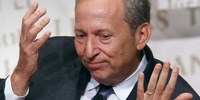
Harvard’s understanding of Russia matters not only because of the University’s ability to shape the perspective of future leaders, but also because of the University’s incredible power to inform United States foreign policy. This is particularly true with regards to American-Russian foreign policy. Probably the best example of Posin’s fears confirmed is the post-war scandal over the privatization of Russia, or the Shleifer affair.[4] After the fall of the Soviet Union, the United States Agency of International Development decided to funnel its federal aid through the Harvard Institute for International Development. Led by Russian politician Anatoly Chubais and advised by Harvard Economics Professor Andrei Shleifer, the aim of the project was to bring capitalism successfully to Russian via privatization. A “highly unusual” situation, the Clinton administration gave the Harvard Institute total control over the aid distributed to Russia. The logic behind this move was simply “those [Harvard] guys, we need them; they’re the experts.”[5] From 1992 to 1997, the Harvard Institute pocketed $40 million directly from the $300 million of aid directed towards Russia. The Institute had significant control over the maneuvering of the new Russian markets, and leaders in the Institute, such as Shleifer, made illegal personal stock investments in Russia. Schliefer, along with Us Secretary of Treasure and former President of Harvard Larry Summers, were eventually put under federal investigation for the occurrence, resulting in Summers’ ultimate departure from the University. Ultimately, not only was the privatization of Russia a failure, but a failure that garnered incredible anti-Western sentiments from Russians (in one poll given, 3.7% of those Russians surveyed felt like the West was “trying to help.”) [6] Harvard’s view on Russia matters because Harvard has the intellectual capital to invoke policy change.
[1] Engerman uses the term “Sovietology” interchangeable with “Russian Area Studies,” “Slavic Studies” and “Soviet Studies,”—for the purposes of this exhibit, we will keep to “Sovietology” as studies directly stemming from the Soviet era.
[2] David C. Engerman, “The Ironies of the Iron Curtain,” Cahiers Du Monde Russe, 45.45/3-4 (2004), 466.
[3] Ibid., 470.
[4] Nathan Thornburgh, “Why Harvard’s Summers Flunked the Presidency,” Time, published February 21, 2006, accessed May 5, 2014, <http://content.time.com/time/nation/article/0%2C599%2C1161877%2C00.html.>
[5] Janine R. Wedel, “Harvard’s Russia-Aid Case,” Wall Street Journal Europe, published March 19, 2001, accessed May 5, 3014, <http://janinewedel.info/harvard_cronycapitalismWSJ.html>
[6] Ibid.

Conclusion
Ultimately, looking at Harvard’s approach to understanding Russian identity validates both Posin and Engerman’s arguments. Seen in Harvard’s General Education offerings, academic resource, and foreign policy decisions, Cold War politics and mentality are always lurking behind American attempts to understand Russia and the world. But so too, is the general desire behind the humanities—to earnestly understand the previously un-understandable.