Catholicism vs. Exceptionalism
Etymology of "catholic": Greek kata holos, about the whole
Etymology of "exceptional": Latin excipere, take out [of the whole]
Russia considers herself to be an exceptional nation. This belief originated no later than the fall of Constantinople. Constantinople had long claimed special privileges as the new imperial capital, the “New Rome,” the inheritor of the privileges of the city of Peter and Paul. After the fall of Constantinople in 1453, some Russians claimed that Moscow was the inheritor of the privileges of Constantinople. As the monk Filofey of Pskov famously said, “Moscow is the Third Rome – and there will be no fourth.”[i]
This idea of Russia as an exceptional people is expressed in many strains of Russian culture. Even after the religious grounding for Russian exceptionalism largely collapsed after the rise of Communism, the tendency of Russians to exalt their nation and see their country as somehow special as somehow special continued in Russia, under the name of the “Russian Idea,” the Русская идея. Some cite Russia's large population. Others cite Russia's position as a philosophical and geopolitical crossroads. Others cite Russia's special spiritual essence. Still others cite Russa's unique historical role in the defense of Europe against the Mongols. Yet others cite Russia's unique role as a Eurasian power, the inheritor of the steppe culture. At times this borders on the idea that Russia is the coming messiah. The common summary of this belief is that Russia has a special calling.[ii]
This is not just the talk of the philosophers or the Orthodox Church. The influential political philosopher Alexander Dugin, a confidant of Putin, adheres to essentially the same philosophy under the name of “Eurasianism.”[iii] Some might even argue that Eurasianism is the official state philosophy, justifying many recent government actions. Not only Russians hold beliefs like this: Westerners exalt Russia as somehow uniquely captivating. The very presence of this exhibit and the existence of the class that organized it is a demonstration that people are interested in learning about the supposed uniqueness and exceptionality of Russia.
Russia conceives herself as unique, and much of the world is compelled to buy into the idea of Russian uniqueness. The Roman Catholic Church, however, is strongly opposed to this view of Russia. According to the Catholic understanding, no nation is unique or exalted in God’s eyes, but rather “the nations count as a drop in the bucket.”[iv] No nation is superior to any other. Cultures may be different, but no culture – Russians included – has any claim to being exceptional or specially called.
This understanding is a fundamental fact in Christian theology and Christian self-understanding. This is because, at one point, there was a nation that was superior to all the others – the Jews. The Christian teacher and missionary Paul explains: “[the Jews have] the adoption, the glory, the covenants, the giving of the law, the worship, and the promises; theirs the patriarchs…”[v] The Jews were God’s chosen people, and the Gentiles were forsaken by God.
The Jews had long been the inheritors of the promise of the Kingdom of Heaven, to be ushered in by the Messiah. The Messiah came, and His name is Jesus Christ. Yet the Jews thrust their inheritance aside by refusing the promised salvation.[vi] As a result of the trespass of the Jews, salvation has come to the Gentiles.[vii] This is not to say that the Gentiles replace the Jews: for Paul himself was Jewish.[viii] Yet Gentiles can now become a part of God’s people alongside Jews, and there is no distinction: “[In Christ] there is neither Jew nor Greek.”[ix] But, as a result of their humble origins and emptiness prior to the tresspass of the Jews, Gentiles must not become arrogant or proud of the fact that God has grafted them in to God’s people: “So do not become haughty, but stand in awe, for if God did not spare the [Jews], he will not spare you either.”[x]
The people of God, then, is composed of all who believe in Christ. God’s people is not strictly Jews, for the Jews abandoned their inheritance by rejecting Christ. Nor is God’s people strictly Gentiles, for it is not too late for Jews to regain their salvation by accepting Christ as their Savior and Lord (the present author stands as evidence). If neither Jews nor Gentiles are God’s people, it is absurd to say that Russians are God’s people or are specially called in any way. Russians are in no way exceptional. Rather, Russians who believe are like any others who believe: adopted children of God, sojourning on earth,[xi] natives of no earthly country but only of the Kingdom of Heaven.[xii] They may be members of the Russian nation, but first foremost they are members of the people of God.[xiii] Russians who do not believe are like any others who do not believe: sinners in need of grace, in need of repentance, in need of the Gospel.
This is how the Catholic Church views Russia, as a composition of Christians and non-Christians. Although a substantial fraction of Russians professes membership in the Russian Orthodox Church, many of these only do so for cultural reasons. The number of regular participants in the life of the Church is very low.[xiv] Then, the mission field in Russia is very open for the Catholic Church to proclaim the Gospel to those who do not know it.
In this quest to proclaim the Gospel, culture is a tool to be used and manipulated. If Russians will understand particular metaphors and speak particular languages, then the Christian’s job is to speak through all the metaphors and languages of culture to proclaim the universal Christian message.
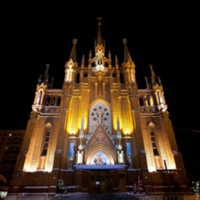
Unfortunately, culture can sometimes create problems. Russian Orthodox culture tends to be opposed to Catholicism, and even frequently persecutes Catholicism, because Catholicism is not viewed as native to Russia.[xv] Precisely the point of Catholicism is that it is not native to any land, but universal. The word “catholic” literally means universal. Russian exceptionalism is here pitted against the Christian ideas that are antithetical to nationalism.
Still, despite its problems, the Russian Orthodox Church is viewed as a legitimate Christian Church.[xvi] The goal of the Catholic Church is explicitly not to convince faithful Orthodox to leave their churches.[xvii] However, one of the major goals of Catholic involvement in Russia in particular is due to the position of Russia among the Orthodox.
Since the 12th century, Russia has had a crucial position among the Eastern Orthodox.[xviii] At least half of Orthodox Christians are under the Patriarch of Moscow.[xix] Today, Constantinople is largely a hollow see, because almost no Christians actually live in Constantinople.[xx] The Russian Orthodox Church has a crucial place in the Orthodox communion.
A goal of the Catholic Church is to repair the schism between Eastern and Western Christianity. The two were in communion with one another until 1054; many times since then they have flirted with reentering communion. If the Russian Church reconciles with the Roman Church, then likely the rest of the Eastern communion will follow, fulfilling this central goal of the Catholic Church.
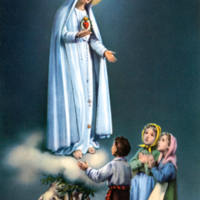
This is not to say that Russia is intrinsically special in any way, but rather that the politics of the moment justify particular emphases in the Roman Catholic view of Russia. There are other circumstantial factors that encourage the Catholic Church to emphasize on Russia. In 1917, there was a supernatural event in Portugal that was observed by 50,000 people. Three women received a revelation from God, in the form of a vision of the Virgin Mary. According to this vision, the Pope needed to issue a consecration of Russia. If the Pope did not consecrate Russia, then there would be various wars. On the other hand, if Russia was consecrated, then Russia would be converted. The Pope did consecrate Russia – several times. It may be that Russia, due to circumstantial factors, does have some sort of important or special role. And it should be noted that perhaps, the conversion of Russia is beginning, as evidenced by many former atheists becoming Christians.[xxi]
While Russia does have great importance in the Catholic view of the world, this importance is only due to the circumstantial characteristics that describe Russia’s place in the world. Nothing is intrinsically special about Russians, Russian culture, or Russia. The Catholic understanding of the other is shaped by the Church’s self-understanding, which decrees that no one earthly nation but the Christian Church is the people of God.
Culture is only a tool to proclaim the Gospel to all, to Russians, to Americans, to Jews. Russians are not saved by their Russianness, nor Americans by their material wealth, nor Jews by their Judaism. All who believe are saved by God’s free gift of grace. Without the salvation in Christ, all – Russians and Americans, Jews and Gentiles – are condemned for their sins. Yet God’s freely offered gift is extended to all – Russians and Americans, Jews and Gentiles – if they believe in Jesus Christ. Regardless of culture, this is the mission of the Catholic Church: “Go therefore and make disciples of all nations, baptizing the in the name of the Father and of the Son and of the Holy Spirit, teaching them to observe all that I have commanded you. And behold, I am with you always, to the end of the age.”
[i] Using Moscow as a name for Russia. See “Sixteenth Century.”
[ii] See: Solzhenitsyn, “A World Split Apart”; Кургинян; Симонов; Savitskii, “A Turn to the East”; Savistkii, “The Migration of Culture”; Florovsky, “The Cunning of Reason”; Аксючиц; Сухонос; Здравомыслова; “Полемика...»; “Сватая Русь»;Бердяев; Гулига.
[iii] Shynkarenko, “Alexander Dugin.”
[iv] Isaiah 40:15, New American Bible (the main Roman Catholic English translation)
[v] Epistle to the Romans, 9:4-5
[vi] Cf. Acts of the Apostles, 13:46, 18:5, 28:25-28; Epistle to the Romans, 9:30-33; etc.
[vii] Epistle to the Romans, 11:11; Epistle to the Ephesians, 3:6; etc.
[viii] Acts of the Apostles, 21:39, 22:3; Epistle to the Romans, 3:9, 9:3, 11:1; Epistle to the Galatians, 1:13, 2:15; Epistle to the Philippians, 3:5.
[ix] Epistle to the Galatians, 3:28; Epistle to the Romans, 10:12; Epistle to the Colossians, 3:11.
[x] Epistle to the Romans, 11:20.
[xi] Cf. First Epistle of Peter, 2:11; Epistle of Polycarp to the Philippians; Martyrdom of Polycarp.
[xii] Epistle to the Philippians, 3:20.
[xiii] First Epistle of Peter, 2:10; Apology of Aristides, 17; etc.
[xiv] See “Russians Return…,” “Most Russian Orthodox…”
[xv] The Episcopal Church; Websterman; Weeks;
[xvi] “Eastern Orthodoxy.”
[xvii] Dunn, "Catholicism in Russia Today."
[xviii] Palmieri, “The Religion of Russia.”
[xix] “Membership of the Orthodox Churches.”
[xx] Jones: “Turkey…”
[xxi] “The Consecration of Russia;” Ratzinger.
Аксючиц, Виктор. «Русская Идея.» Accessed 3 May 2014 < http://www.pravoslavie.ru/jurnal/ideas/rusidea.htm>.
Бердяев, Николая. «Русская Идея.» Accessed 3 May 2014 < http://www.krotov.info/library/02_b/berdyaev/1946_037_07.html>.
Dunn, Dennis J. “Catholicism in Russia Today.” 2004. Accessed 3 May 2014 < http://www.eastwestreport.org/19-english/e14-2/132-catholicism-in-russia-today>.
Здравомыслова, О.М. «Русская Идея: Антиномия женственности и мужественности в национальном образе России.» Accessed 3 May 2014 < http://www.metal-profi.ru/library/rysskaj_idej.htm>.
“Eastern Orthodoxy.” 10 August 2004. Accessed 3 May 2014 < http://www.catholic.com/tracts/eastern-orthodoxy>.
Florovskii, Georgii V. “The Cunning of Reason.” In Forebodings and Events, pp. 30-40. Idyllwild, CA: Charles Schlacks, 1996.
Гулига, Арсеный. «Формули Русскои идеи.» Accessed 3 May 2014 < http://www.patriotica.ru/religion/gulyga_rusidea.html>.
Jones, Dorian. “Turkey: Istanbul’s Greek Community Experiencing a Revival.” 2 March 2011. Accessed 3 May 2014 < http://www.eurasianet.org/node/62990>.
Кургинян, Сергей. «Единственная страна, которая знает другой путь развития – Россия.» 29 December. Accessed 3 May 2014 < http://file-rf.ru/analitics/443>.
“Membership of the Orthodox Churches.” Accessed 3 May 2014 < http://orthodoxengland.org.uk/numbers.htm>.
“Most Russian Orthodox Don’t Read Bible, Pray, Go to Church – Poll.” 17 June 2013. Accessed 3 May 2014 < http://en.ria.ru/russia/20130617/181714687/Most-Russian-Orthodox-Dont-Read-Bible-Pray-Go-to-Church--Poll.html>.
Palmieri, Aurelio. "The Religion of Russia." The Catholic Encyclopedia. Vol. 13. New York: Robert Appleton Company, 1912. 3 May 2014 <http://www.newadvent.org/cathen/13253a.htm>.
«Полемика славянофилов и западников.» Accessed 3 May 2014 < http://wordweb.ru/filo_hist/49.htm>.
Ratzinger, Cardinal Joseph. “The Message of Fatima.” Accessed 3 May 2014 < http://www.vatican.va/roman_curia/congregations/cfaith/documents/rc_con_cfaith_doc_20000626_message-fatima_en.html>.
“Russians Return to Religion, But Not to Church.” 10 February 2014. Accessed 3 May 2014 < http://www.pewforum.org/2014/02/10/russians-return-to-religion-but-not-to-church/>.
Savitskii, Petr N. “A Turn to the East.” In Forebodings and Events, pp. 5-7. Idyllwild, CA: Charles Schlacks, 1996.
Savitskii, Petr N. “The Migration of Culture.” In Forebodings and Events, pp. 41-51. Idyllwild, CA: Charles Schlacks, 1996.
«Святая Россия.» Accessed 3 May 2014 < http://www.newborn-russia.narod.ru/ri.html>.
Симонов, Константин Василиевич. «Россия – единственная страна, которая готова предложить глобальный консервативный проект.» 2 July. Accessed 3 May 2014 < http://tass-analytics.com/opinions/334>.
Сухонос, С. И. «Новая Русская Идея – Духовность, Справедливость, Единство.» Accessed 3 May 2014 < http://www.trinitas.ru/rus/doc/0001/005a/00011111.htm>.
Shynkarenko, Oleg. “Alexander Dugin: The Crazy Ideologue of the New Russian Empire.” 2 April 2014. Accessed 3 May 2014 < http://www.thedailybeast.com/articles/2014/04/02/alexander-dugin-the-crazy-ideologue-of-the-new-russian-empire.html>.
“Sixteenth Century.” Accessed 3 May 2014 < https://oca.org/orthodoxy/the-orthodox-faith/bible-history/church-history/sixteenth-century>.
Solzhenitsyn, Alexander. “A World Split Apart.” Commencement address delivered at Harvard University, June 8, 1978. Accessed 1 May 2014 < http://www.orthodoxytoday.org/articles/SolzhenitsynHarvard.php>.
“The Consecration of Russia.” 2013. Accessed 3 May 2014 < http://www.fatima.org/essentials/facts/consecra.asp>.
The Episcopal Church. “Russian Orthodox Church provides evidence of Roman Catholic ‘proselytizing.’” 10 July 2002. Accessed 1 May 2014 < http://library.episcopalchurch.org/article/russian-orthodox-church-provides-evidence-roman-catholic-proselytizing>.
Websterman, Toby. “Religious Persecution in Russia?” 23 April 2002. Accessed 3 May 2014 < http://www.wnd.com/2002/04/13639/>.
Weeks, Ted. “Religion, nationality, or politics: Catholicism in the Russian Empire: 1863-1905.” Journal of Eurasian Studies, Vol. 2, Issue 1, pgs. 52-59