
Browse Items (158 total)
Sort by:
New York Times Headlines - May 20, 1918
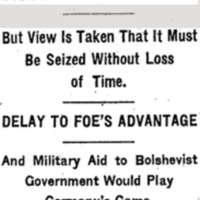
Headline from the front page of The New York Times, May 20, 1918. This headline was cited in Lippman and Merz’s A Test of the News as an example of the bluntly interventionist positions present in purportedly objective news articles. There are a…
Neatline map sample
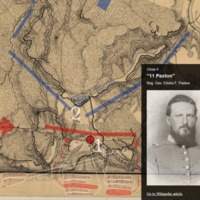
Neatline map sample
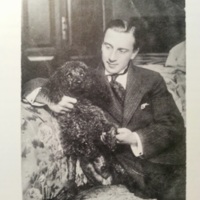
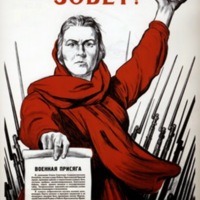
Molotov Cocktail
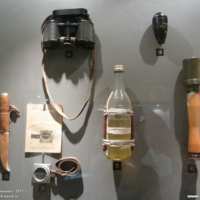
Existing first as a makeshift, anti-Soviet bomb, the Molotov cocktail has taken on meaning as not only a material weapon of guerilla warfare, but also an international symbol of resistance. As an explosive device, the Molotov cocktail has a long…
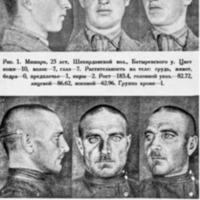
Moldovan Cyrillic

This is a table equating groups of roman characters and cyrillic characters. In the 1920's, the Soviet Union attempted to unify Bessarabia (a region of Romania that used to be a part of the kingdom of Moldavia before the Ottoman Empire) and the…
Migration of the Gagauz People into Moldova
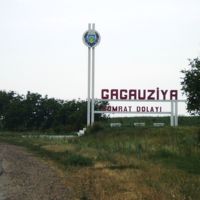
The Gagauz people are an Orthodox Turkic people mostly living in Moldova. Originally living in Bulgaria, they were given incentives to re-settle to Moldova by the Russians following the Russo-Turkish wars in order to settle an under-cultivated…
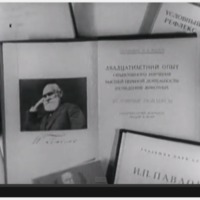
Mendeleev's table of the elements
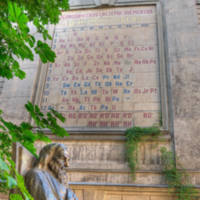
This is a picture of the periodic table located adjacent to a statue of Dmitri Mendeleev in St. Petersburg. Mendeleev pioneered the structure of the table, which greatly increased understanding of chemical interactions. The periodic table is an…
Matryoshka doll or palekh box
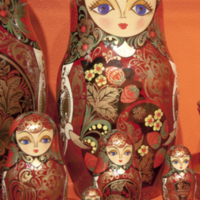
Flourishing under Stalin-era reinvention of Russian national culture, Russian lacquer crafts were creations of a Tsarist age. In fact, it was from Japanese toys and boxes that Russian craftsmen took inspiration, so it is on a borrowed canvas that…

Lopatkina's Injury
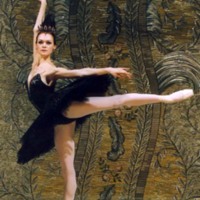
In 2001, Ulyana Lopatkina suffered a serious injury that forced her to stop dancing for two years, during which time she married and had a daughter. Interestingly, it was Mikhail Baryshnikov—one of the greatest ballet dancers alive and a former…