
The Natural Arts
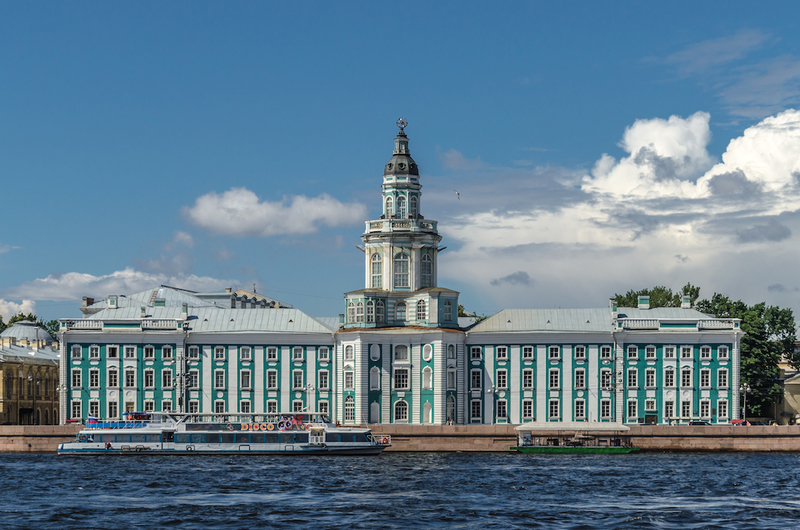
The first idea we consider is that Russia actively chooses to associate itself with science. The most obvious example of this choice is the history of the Academy. It was founded in 1724 by Peter the Great, which is not surprising given his propensity for scientific research and advancement (“Academy of Sciences (Russian Organization) -- Britannica Online Encyclopedia” 2014). The significance of this event cannot be understated—with the establishment of the Academy, the Russian Empire adhered itself to scientific standards and concepts. It is useful to compare the Academy with the Royal Society, which is likely the organization to have inspired Peter the Great to create the Academy. The Royal Society is the British official yet independent organization dedicated to coordinating research in Britain and advising the government on scientific events and research. (“About Us”)(“Royal Society (British Science Society) -- Britannica Online Encyclopedia” 2014) At the time of the creation of the Russian Academy of Sciences, Isaac Newton—of calculus and laws of motion fame—was president of the Royal Society. It seems very likely that Peter the Great intended, by the founding of the Russian Academy of Sciences, to promote the same sort of domestic scientific cooperation, and resulting international impact, that the Royal Society created in Britain. It is certain that by creating a Russian version of the British Royal Society, the French Academy of Sciences, and the German Academy of Sciences Leopoldina, among others, Peter the Great wanted to convey that Russia too was joining this group of scientific elite.
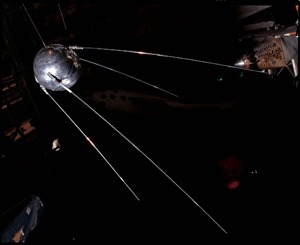
One other concrete example of how Russia (or at the time, the Soviet Union) chose to associate itself with science is during the space race, and particularly during the Sputnik phase. The Soviet Union launched Sputnik, the world’s first artificial satellite, into orbit in 1957, beating the United States by a healthy margin and decisively winning the first round of the space race. Of course, the significance of the first satellite on its own is incredible, but what is also important is how the USSR got to the point of launching Sputnik. Specifically, the Academy of Sciences of the USSR (the new name of the Russian Academy of Sciences following the 1917 revolution) was tasked with “general scientific supervision and providing equipment for research”, with state agencies handling much of the actual engineering and logistical work (“О запуске Первого искусственного спутника Земли в СССР” 2014). Two things are notable: first, the venture was recognized as a primarily scientific one with military significance, not the other way around. Second, the Academy was specifically tasked with the general supervision. The state, by deferring on this to the semi-external body of the Academy, was demonstrating that it meant to hold true to scientific principles, less constrained by political meddling than if a state agency had been assigned this role. Out of many examples, the founding of the Russian Academy of Sciences, and its role in the Sputnik event, demonstrate that the Russian state was making a commitment to science, and that it wanted to be recognized both domestically and internationally as having done so.