Browse Exhibits (22 total)
RUSSIA OBJECTIFIED
THE ASSIGNMENT
This Unit Assignment asked students to choose from a collection of objects the teaching staff identified as playing some role in the construction of 'Russianness', from either a domestic or global perspective (or both), over time. Having made their selections they went on to create object biographies. The final stage was a group curation exercise that produced the thematic groupings, arrangements, and 'wall texts' you see here. In other words, this Omeka page is the virtual representation of collaborative work that took place in real time and physical space (Gund 522) as part of SW52.
To navigate the exhibit, use the links on the right.
THE RUSSIAN ICON


PROJECTING POWER
 SPUTNIK
 MOLOTOV COCKTAIL
 T-34 TANK
 KLUTSIS PROPAGANDA POSTER
DECADENCE IN THE EVERYDAY


From Pavlov to Putin: The Uniqueness of Psychology in Russia

The famous Pavlovian dog experiment on classical conditioning.
Overview:
Psychology, as a field, has faced unique and fascinating challenges in its growth as scientific field of research in Russia. Viewed primarily through what is now known as the Russian Psychological Society, the goal of this project is to give you a better understanding of the unique tensions facing the field of psychology throughout Russian history. You will find that by studying and examining the development and transformation of RPS, you will get a better understanding of its intricate relationship with Russian politics in a global perspective as well as a broader lesson about the transformation of the Russian psyche.
Never Just Science: Psychology in Russia
“In no other scientific field discussed in this volume does there exist an identifiably Russian tradition to the degree that there does in physiology and psychology… the already existing link between materialism in science and radical politics was strengthened and made more apparent” (Graham 355).
In many ways, the history of the scientific field of psychology in Russia is a proxy for understanding the history of modern Russia itself. Consider: one strain of a science could represent the tumult of an entire 125 years of Russian transformation and development, infusing a unique sense of “Russianness” into its very core. Although this may appear to be a robust claim, the reason this proxy is so accurate is because psychology in Russia is so uniquely Russian.
If the history of Russian psychology is an ideal proxy for many aspects of Russian history, than the history of the Russian Psychological Society (RPS) is an excellent proxy for understanding the trajectory, evolution, and sometimes devolution of psychology in Russia. When viewed through the lens of the RPS, the history of psychology in Russia reveals two sets of unique tensions and interplays on Russian psychology. These two sets of interplays reveal many uniquely Russian instances of socio-political history and tumult, particularly as understand through domestic and global perspectives: (1) the intricately interwoven relationship between psychology and Russian philosophy, politics, and ideology and (2) the slow rebuilding of the credibility of Russian psychology a respected field both in Russia and on the global stage during the post-Soviet Union era.
Early History of the RPS
Founded in the 1885 in Moscow, the goal of the organization was to further “systems of pedagogy; application of Psychological Knowledge to other sciences, such as logic, morale, philosophy, law, aesthetics, pedagogy and other; History of Psychology and its role in the old and in the new time” (RPS History; Russian Psychological Society). RPS played a major role in not only growing the academic interest of a nascent field of research seeking to spin away from philosophy but also publishing and translating international psychological research (RPS History; Epiphany). Note, however, that the relationship between psychology and other fields was set forth in the very charter of the organization what with the point about “application of Psychological Knowledge to other sciences.”
The unique relationship between Russian psychology, ideology, and politics fused closer and closer together around the turn of the century. RPS, as a leading global psychological organization, continued to grow and gather interest from its founding until the Revolution (Andreeva 11-13; RPS History). Its members and honorary members included everyone from Leo Tolstoy to Wilhelm Wundt and William James (the latter being two foreign juggernauts of the burgeoning field of psychology). Furthermore, major international players in the psychological field began to arise from within Russia during that time, with one of the best-known examples being Nobel Prize-winning Ivan Pavlov and his classical dog conditioning experiments are that still being taught in psychology classes all over the world today (Pavlov).
Major Publications and Their Significance
The Psychological Society’s flagship publication, “Problems of Philosophy and Psychology,” even had up to 2,000 subscribers at one point in 1893 (Grotto; Zakutnyaya). Furthermore, members of the Psychological Society even went on to publish the landmark “Problems of Idealism: Essays in Russian Social Philosophy” (Poole).
The context and significance of “Problems of Philosophy and Psychology” as well as “Problems of Idealism” highlight the nature of the intricately interwoven relationship between psychology and Russian philosophy, politics, and ideology. The former, a journal-type publication lasting from 1889 to the Revolution early in the 20th century, sought to provide an ideological and spiritual thought-provoking academic outlet for a variety of thinkers at the time (Epiphany; Zakutnyaya). Pre-eminent Russian thinkers (like Leo Tolstoy) and early Russian psychologists published a variety of papers on a number of subjects in that journal. All the while, the underlying liberal ideology of the publishers and of the Psychological Society were thinly veiled: “Individual articles can be seen trying to give the public the Editor sound philosophical problems, as well as indirect evidence… to the publication of the liberal trend… Writer’s work [were] evaluated in terms of philosophical coherence of his views and their social values” (Zakutnyaya).
This increasing shift toward promoting liberal ideology became more prominent after the turn of the century. As the shift toward thought change and eventual Revolution became more and more imminent, the relationship between the Psychological Society and the socio-political landscape became all too real. For example, a group of eminent members of the Psychological Society published the aforementioned collection of ideologically-charged essays, “Problems of Idealism,” in 1902. As explained by Randall Poole, “An integral part of the importance of the Psychological Society was its advancement of the theoretical foundations of liberalism… It is no exaggeration to claim that the Psychological Society was the theory center behind Russian liberalism” (1). Thus, the Psychological Society found itself gaining prominence, as well as quickly influencing and molding a significant portion of Russian liberalism at the time.
The Dark Ages
Although not much is published about the precise circumstances and conditions of the downfall of the Psychological Society, two things are confirmed: (1) the radical ideological shifts during the Revolution led to the disbanding of the Society and (2) the entire fields of psychology and psychiatry were more than just growth-stunted in the decades to follow – they were severely abused by the government. Indeed, this is one of the most jarring examples of the unique relationship between psychology and Russian politics. The “Dark Ages” of Russian psychology ironically sheds light on the unique “Russianness” to this scientific field from a global perspective.
The official RPS website only briefly mentions the 40-year long “Dark Ages” of psychology in Russia and the RPS organization from 1917 to 1957. Note that there is a juxtaposition of an ever-so-slight twinge of sadness as well as great pride in the role of the organization during that time: “National reforms and the Russian Civil War brought the official activity of the Russian Psychological Society to a hold [but] up until the last moment of its operation the Society continued to serve members, the public and the discipline” (RPS History; Russian Psychological Society).
Importantly, however, psychological and psychiatric activities were not brought to a complete halt but, rather, took a darker turn during those 40 years. Key areas of psychological research such as Gestalt psychology were indeed outlawed in Russia due to their “‘bourgeois – psychological’ thought-and practice systems” (Razran 1187). The more chilling part of this story, however, is that other closely related scientific areas – such as psychiatry – were being tremendously abused by the new government. A 2013 report issued by the European Parliament notes that in the Special Psychiatric Hospital located in Kazan during that time, half of the patients had no mental illness and were there for political reasons only (Van Voren 8).
Abuse, the Cold War, and Cosmonauts
This abuse of the field of psychology only grew darker after World War II: “the available evidence shows that in the course of the 1960s the political abuse of psychiatry in the Soviet Union became one of the main methods of repression” (Van Voren 8). Entire new categories of mental illness were being developed, what with the eventual creation of such conditions as “sluggish schizophrenia” – with main symptoms being “reform delusions, struggle for truth, and perseverance” (Van Voren 10).
Although that period was decidedly dark and unfortunate for both the RPS and for the field of psychology, the Cold War played a major role in bringing the RPS back to life. This illustrates yet another instance of just how uniquely close the relationship between psychology and the Russian political landscape really is (Kelly). The RPS was re-instated as the “Union of Psychologists of USSR” in 1957. The organization spent much of the immediate decades following that focusing on becoming more aligned and relevant to national socio-political goals, such as finding ways to apply psychology to the “newly established domain of cosmonautics” (Kelly; RPS History). Not much, however, was truly accomplished by the RPS until the fall of the Soviet Union.
Rebirth on the Global Stage
As with Russia as a whole, major changes have taken place within the RPS as well as the field of psychology in the decades following the fall of the Soviet Union. The national focus has since shifted to addressing newfound psychological needs as well as re-establishing Russian psychology as credible and academically rigorous – especially on the global stage (Daw). As Daw explains in “Psychology Around the World”: “Life has been bleak for many Russians since the breakup of the Soviet Union… areas that demand psychologists’ intervention include: divorce, [rising] alcoholism and drug addiction” and many others.
The RPS has also played a major role in transforming the global perspective on psychology in Russia, particularly with the 2008 launch of its annual, rigorously peer-reviewed journal, “Psychology in Russia: State of the Art.” Not surprisingly, the very name of the journal is ambitious! The editors of “State of the Art” acknowledge the importance of the academic work being done by Russian psychologists from a domestic perspective (see item on this subject) and continue to try to increase the growth and visibility of Russian psychological work in the context of global credibility as well as a domestically-applied sense (Zinchenko & Petrenko 6-12). The editors even admit that psychology in Russia has recently “made a miraculous transformation from a rather exotic – if not marginal – academic discipline to almost a mass occupation” (Zinchenko & Petrenko 6-12).
Thus, the history of the RPS and of psychology in Russia during the last 125 years has been wrought with broadstrokes political tension and upheaval, very much reflecting the history of Russia itself during the same timespan. This unique Russian psychology highlights the certain “Russianness” that is now so deeply rooted in the history of the discipline. Most importantly, from a global perspective, the rebuilding of the RPS and of Russian psychology is a wonderful proxy for understanding the rebuilding of Russia itself – both now and far into the future.
Works Cited
Andreeva, Galina. "The Difficult Way of Social Psychology in Russia." Psychology in Russia: State of Art 5.1 (2009): 11. Print.
Daw, Jennifer. "Psychology Around the World." Monitor June 2002: n. pag. APA. Web. 1 May 2014.
Epiphany, Diana. "Moscow Psychological Society Late XIX - Early XX Century." Development of Personality 1 (2005): 26-33. RL Online. Web. 1 May 2014.
Graham, Loren. Science and Philosophy in the Soviet Union. New York: Knopf, 1972. Print.
Grotto, Nikolai. Questions of Philosophy and Psychology: Book 1. Runivers. Web. 1 May 2014. <http://www.runivers.ru/lib/book3201/10269/>.
"Ivan Pavlov - Biographical". Nobelprize.org. Nobel Media AB 2013. Web. 1 May 2014. <http://www.nobelprize.org/nobel_prizes/medicine/laureates/1904/pavlov-bio.html>
Kelly, Katie. "Psychology and the Soviet." Guided History. Boston University, n.d. Web. 1 May 2014. <http://blogs.bu.edu/guidedhistory/moderneurope/katie-k-2/>.
Poole, Randall. Neo-Idealist Philosophy in the Russian Liberation Movement: The Moscow Psychological Society and Its Symposium, "Problems of Idealism". Washington, D.C.: Kennan Institute for Advanced Russian Studies, 1996. Print.
Poole, Randall Allen. Problems of Idealism: Essays in Russian Social Philosophy. New Haven: Yale University Press, 2003. Print.
Razran, Gregory. "Soviet Psychology and Psychophysiology: How successful are the two sciences in the Soviet Union? Are the Russians able to synthesize them?" Science 128.3333 (1958): 1187-1194. Print.
"RPS History." The Russian Psychological Society. N.p., n.d. Web. 1 May 2014. <http://www.psyrus.ru/en/about>.
"Russian Psychological Society (RPS)." Russia - Russian Psychological Society (RPS). N.p., n.d. Web. 1 May 2014. <http://resources.iupsys.net/iupsys/index.php/iupsysresources/239-russia-articles/3823-russia-russian-psychological-society>.
"Russian Psychological Society." Wikipedia. Wikimedia Foundation, 18 Apr. 2014. Web. 1 May 2014. <http://en.wikipedia.org/wiki/Russian_Psychological_Society>.
Van Voren, Robert. "European Parliament." Psychiatry as a Tool For Coercion in Post-Soviet Countries. Directorate-General for External Policies of the Union, n.d. Web. 1 May 2014. <http://www.europarl.europa.eu/RegData/etudes/etudes/join/2013/433723/EXPO-DROI_ET(2013)433723_EN.pdf>.
Zakutnyaya, OV. "Journal: Problems of Philosophy and Psychology": The Early Years of Publication (1889-1895)." Dissertation (2008). Mediascope. Web. 1 May 2014.
Zinchenko, Yury & Petrenko, Viktor. "Introduction." Psychology in Russia: State of the Art 4 (2011): 6-12. Online.
From Autocracy to Ally
During the American Civil War, foreign policy proved to be significant in the effort to preserve the Union. Because the Confederacy immediately pursued diplomatic recognition by Britain and France, the United States was forced to both counter those efforts and find stalwart allies abroad. Russia, seemingly distant and despotic, would prove to be a firm friend of the United States. Although a great deal of the Russo-American friendship arose out of shared interests against Britain and France, the emancipation of the serfs by Alexander II gave a strong ideological boost to this informal alliance.
Knowing the Truth: Russia and Science
Mendeleev. Lomonosov. Tsiolkovsky. All famous Russian scientists whose work set the foundations for numerous branches of modern science. Russia has been the source of many innovations throughout its history. The Russian Academy of Sciences was created to coordinate efforts of people like those just mentioned, to further academic research and scientific progress. The actions taken by the Russian state and members of the Academy demonstrate that scientific development is an integral part of the Russian soul, and how it must be understood by those outside Russia.
Nancy O'Neil
After the Mongol invasion, the Russian Church answered to two authorities: Byzantium and the Golden Horde. Both the Byzantine emperor, or basileus, and the Qipchaq Khan served as models of divinely sanctioned rule, and thusly, were influential to the conception of the tsar. In addition to these two models, the early Russian Orthodox Church sought to associate Muscovy and the tsar with Kievan Rus’ and the Roman Empire, leading to a complex and inherited construction of power.
Google, Russian Sovereignty, and Algorithmic Authority
INTRODUCTION
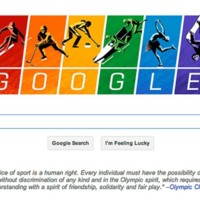
An individual might never have physically crossed over the border into Russia. But in a way, thanks to Google, he or she might already have been there. He might have wandered the streets of Moscow through Google Maps or witnessed important Russian moments, such as the meteor that hit Russia last year, through the footage created by average citizens and uploaded to YouTube. Never before has it been possible for a foreigner to access Russia so quickly or so easily. While this certainly changes concepts of foreignness and faraway-ness, what is more the phenomenon is that the experience of Russia through Google is not only more widely accessible but also ubiquitous within Russia and without. In the same way that I can see, feel and live the wonders and vices of Russianness through Google, this is increasingly the way people within Russia and around the globe are experiencing it too.
Since its birth in 2001, Google has been working to reorder the world and to redefine traditional, governmentally enforced borders through the global perspective its search engine and other products provide. Understanding the particular experience of Russia through the lens that Google provides reveals Russia’s resistance to a borderless world and, more deeply, the central characteristic of Russianness as the will to define its nation and its self by way of marking out its borders and maintaining distinct sovereignty.
Google, Russian Soverignty, and Algorithmic Authority →
The Kirov Ballet & The "Deep-Lying Sadness" of Russia
"Leningrad retains its real dignity despite the transfer of power, despite political demotion. […] A noble city of fair aspect; yet sad, deeply sad; too much rent by the ravages of history. The wounds heal, but the scars remain. That deep-lying sadness and tragic mien contribute to the heroic edifice—great ballet!"
~~Leningrad’s Ballet: Maryinsky to Kirov
Examining “Russianness” through the lens of the Kirov Ballet reveals key aspects of the Russian spirit: an ardent desire for greatness, a fierce ethos of sacrifice, and a “deep-lying sadness” that is the essence of the morose, captivating majesty of the Russian soul.
[Word Count: 100]
A Cold Study: Russia at Harvard
In October of 1896, Harvard appointed Leo Wiener to teach Russian, Polish, and Old Church Slavonic at the college, thus becoming the first university in America to appoint an instructor in Slavic Languages and Literature.[1] Since then, Harvard has been at the forefront of American academic conversations involving Russia. With the post-WWII boom of interdisciplinary Russian Studies and Sovietology, Harvard's relationship with Russian studies is a constantly shifting one, weaving in and out of political and interdisciplinary discourses. This exhibit first outlines the history of tension between politics and authenticity that undergirds Russia studies. It then examines Harvard's specific role and attitude in this history. This exhibit concerns itself with the following questions: How has Harvard's approach to Russian studies changed over time? What does Harvard think students currently need to know about Russia to be engaged in the world around them? What is at stake in the study of Russia at Harvard?
[1] "History," Department of Slavic Languages & Literatures, Harvard University Faculty of Arts and Sciences, accessed on May 5, 2014. <http://slavic.fas.harvard.edu/pages/history-slavic-languages-and-literatures-harvard-university>
The Paradox of Business in Russia
IKEA is a company that provides a fascinating lens through which to understand Russia’s place in global perspective. Indeed, the formidable physical presence of these megastores and their ongoing success is representative of an emerging consumer market and a lifestyle of the twenty-first century to which many in the Russian middle class seemingly aspire. As a powerful multinational company, IKEA also stands for a business ideology and case study of entering and navigating the Russian market. As such, the company, its brand, stores, and megamalls all sit at the intersection of social and political themes in contemporary Russia.
Identity Dynamics
(formerly known as Team Aral ft. Special Military Man)
Drunk Bears, Armed Babushkas: Reddit’s Russia
Many other exhibits for this assignment will no doubt look at Russia through the lens of well-established organizations in the elite realms of politics, international affairs, cinema, and the arts. While examining these topics will certainly return nuanced, interesting perspectives on what Russia means in global context, they might leave untouched how Russia is seen by the average person. For this we have to turn to more “lowbrow” sources. Internet memes in particular are of interest.
Memes – defined here as viral internet images and videos, usually with recurring themes – are meant to be viewed in seconds, so they offer a very concise perspective on Russia unhindered by subtlety. Humor allows people to bring dark themes out into the open that they wouldn’t normally talk about in a conversation. Anonymous authorship and crowd adaptations, combined with sheer quantity of memes at hand, make it feel more representative of what a variety of people think. There isn’t one person responsible for making a certain meme, after all – they spring from the ether, being posted anonymously online and then going viral because they strike a certain chord in the psyche of the westernized young men who populate internet culture. So where better to study Russia as seen online than Reddit, an entertainment, social networking, and news site that styles itself as “the front page of the Internet?”
Russia in particular merits study on Reddit because Russia itself has become a meme. Sites across the web, from car sites to gossip blogs to Buzzfeed, are seizing strange pictures from the Russian Internet to paint a picture of Russia as a land of dashcam videos and dancing bears. Russian memes are unusually united in their portrayal of the nation – other countries’ National humor subreddits (humor boards) might have funny events that just so happen to occur in a certain country, or, as with China’s mistranslation and knock-off goods pictures, there might be memes specific to a certain country, but there are few other nations where the memes aspire to be representations of the country as a whole – titles of posts include “Just a regular day in Russia,” “Welcome to Russia,” “Reddit, I present to you Russia,” and the most ubiquitous, “Meanwhile in Russia.” These titles seem to imply that Russia operates as a parallel universe, where the rules of living are simply different – while pasty Westerners stare at their smart phones, the Russians are “drinking with bears, climbing big buildings, and swearing at flaming lumps of space-rock” (Rann). Reddit’s depictions of Russia mark a return to how the country has been historically viewed – as a place far apart from the Western tradition, where barbarity reigns – as seen through lawlessness, militarism, Russian technology and humourously inhuman infrastructure – and an environment exists that is marked by nonchalance in the face of insanity.
Russia historically has been seen as a place outside of the rationalist west – as a more mystical place where emotions and irrationalism reign – as a place seen by Eurasianist philosophers as “’anarchical’ by its very nature” (Savitskii 39) and by Marquis de Custine as a place populated by barbarians, marked by a “want of logical minds” (564). Even earlier, during the time of Ivan the Terrible, an English traveller commented that “to drinke drunke is an ordinary matter with them every day in the weeke. …. The whole countrie overfloweth with all sinne of that kinde. And no marveile, as having no lawe to restraine whoredomes, adulteries, and like uncleannesse of life” (Rann). During the Cold War, however, this narrative of unbridled spirituality and anarchy gave way to that of a heartless, logical, cold-blooded rival – that of a place where fun is forbidden because it’s bourgeois and distracts from building satellites and nuclear bombs. Jokes from this period were characterized by the Russian reversal – “In Soviet Russia, TV watches YOU!” – which put Russia as the opposite and rival of the West in every way. But as the Cold War ended, and as Russia embarked on a decade of lawlessness and decay, Russia ceased to be seen as the West’s enemy and more as its “slightly unhinged step-brother” (Rann). This change in perceptions, as seen by Russian internet memes, marks a return to the past when Russia was seen as a barbaric land of the Tatars.
Russia is seen on Reddit as a place where lawless absurdity reigns daily. Russia on Reddit, it seems, is a land populated by anthropomorphic bears – the national symbol is frequently photographed live being pet outside in parks, riding inside of city buses, staring out the window of a taxi cab, in a bar sharing drinks with drunk Russians, or, improbably, riding horses on a racetrack. To reiterate, these are actual pictures of actual bears – Russia’s national symbol has become something that lives amongst its wild populace. Another significant part of Russia as seen by the Internet – less common on Reddit, but viral elsewhere – are videos of Russian youth on top of impossibly high buildings. Anywhere a tall building is to be found, it seems, whether it be the Pyramids, the tallest building in China, or a random radio tower in Siberia, there will be a Russian atop it, never wearing any safety equipment, and frequently are literally dangling on its edge, or doing pull-ups while the ground lies hundreds of feet below. Perhaps the largest Russian meme is the dashcam video, which was originated as a legal protection from auto insurance fraud or corrupt policemen, but has now become ubiquitous in cataloging the insanity taking place on Russian roads – cars spin 360 degrees while going at highways speeds and survive intact, cars drive by with men on top of them, kicking the windshield, horrific accidents occur and the drivers survive, … or not. Entire Youtube collections exist to highlight the best of Russian dashcam videos.
An extension of the meme of lawless absurdity is an undercurrent of militarism present in many Russian memes. Guns, tanks, and hooligan soldiers seem to run freely in Russian society, calling to mind less a global military threat and evoking more a landscape where barbarism has made casual juxtapositions of the military amidst its citizens commonplace. Perhaps one of the most popular images on Russian reddit is one of a nuclear submarine within 100 meters of a crowded beach of sunbathers. Nobody is paying the submarine any attention – it’s implied that to them, having nuclear submarines in their midst is just a part of their reality. Tanks, too, are a part of this reality – jumping across highways, refilling at gas stations, being driven by Santa Claus. Boys bring machine guns to show and tell, grandmothers come into subways casually holding rifles, Russian mobsters get photographed on Google Street view.
Perhaps one of the most pronounced shifts in perceptions of Russia, as witnessed by Reddit, is that of the relationship between Russians and technology. Russia in the past was seen as a nation of technological prowess, where study of math and science was prioritized and where, at least initially, Russian accomplishments in space caught Americans so off-guard that it prompted an existential crisis. In the halls of Reddit, there is still emphasis on Russian ingenuity, but of a different kind – that of makeshift adaptations amidst poverty and rusting Soviet machinery. Russian innovation today is a cow strapped to a truck, or a car being filled to the brim with apples, or being held together by shrinkwrap, or a urinal being converted into a toilet with a traffic cone, or a woodburning stove, complete with a smokestack, being built into a Volvo to head it. These memes are interesting because they subvert a Soviet stereotype into a new reality – one where Russia is no longer feared superpower but a lawless alternate universe.
Crucial to these memes’ potency is the idea of nonchalance in the face of insanity. Russians within these memes never seem to express any surprise at the events happening – in one dashcam video a street car derails and comes crashing along a bridge, but the pedestrians walk along like they’ve seen these things for years. Likewise, none of the participants in any of the memes seem to have self-awareness of the ludicrousness of their actions – in their world, it is implied, feeding a bear cub at a park is the norm. This nonchalance is compounded by the language barriers between Western observers and the Russian internet from which the images are sourced. The images enter the Western net un-credited, devoid of context or comments from those who took them. They seem to spring from the ether, which only reinforces the idea that they come from a strange parallel universe. The façade of objectivity that a camera lends reinforces this notion. Unlike many other viral images, the Russian memes that enter the West have square emphasis on the image itself, and not on any textual humor that would require knowledge of Russian language or culture to understand. The nonchalance of those involved, combined with the veneer of objectivity that a camera lends situations, creates memes that are then presented to the Reddit world as “that’s just the way Russia is.”
The study of memes on Reddit implies that perceptions of Russia in the West are returning to their roots. Although Russia is still seen as very Soviet, it is because the Soviet Union now represents something backward rather than forward. During its heyday, the USSR represented a total aberration from how Russia was perceived – it became the chief enemy to the West, a strange sterile land of bread lines and atom bombs, and the butt of the Russian reversal joke was that everything in Russia was diametrically opposed to the West. But rather than now being opposed to the West, Russia is now just seen as totally apart from it – a strange land of humorous barbarity, where armed grandmothers and live bears alike congregate on the subways, and where Russian ingenuity has transformed from meaning that something is on the cutting edge of technology into something meaning ingenius, unsafe fixes to falling apart machinery. Perceptions of Russia today are basically where they were at the time of Ivan the Terrible, when the English traveler commented on the drunkenness and unlawfulness of Russian life.
Works Cited
de Custine, Astolphe. Letters from Russia. New York: New York Book Review Classics, 1843. Print.
Leshchinskaya, Natacia. "The fast, furious, and funny: Behind Russia's dash cam culture." Daily Dot. N.p., 05 Jun 2014. Web. 5 May 2014. <http://www.dailydot.com/lifestyle/russia-dash-cam-videos-livejournal/>.
Rann, Jamie. "Meanwhile, in Russia: Buzzfeed, Russia and the west." Calvert Journal. Calvert Journal, 18 Nov 2013. Web. 5 May 2014. <http://calvertjournal.com/comment/show/1776/buzzfeed-russia-virals>.
"/r/funny search results: Russia." Reddit. Reddit. Web. 5 May 2014. <http://www.reddit.com/r/funny/search?q=russia&sort=relevance&restrict_sr=on&t=all>.
"/r/WTF search results: Russia." Reddit. Reddit. Web. 5 May 2014. <http://www.reddit.com/r/WTF/search?q=russia&sort=relevance&restrict_sr=on&t=all>.
Peter, Savitskii. Exodus to the East. Charles Schlacks Jr Pub, 1996. Print.
ITEMS
https://www.youtube.com/watch?v=-K-zDK4wrI4
This video, titled “Who let her behind the wheel?” is of note because it marks a synthesis of Russian jokes, by both insider and outsider perspectives. It’s a viral video that has gotten 12 million views on Youtube, starring a young woman who hits a dog while driving, exits to examine the dog, and then, while she’s not paying attention, the dog hops into the drivers’ seat and begins driving. It thus combines the humor of a Russian reversal with that of a dashcam video. What further complicates the story is that unlike most dashcam videos, its low-tech aesthetics are a sham – what begins looking like a homemade video by the end is revealed to be an ad by Subaru, a Japanese car company. Thus an outsider is
Russia from a Global (Investor's) Perspective
An investment is an expression of opinion in a very concrete way: you are literally putting your money where your mouth is. In the post-Soviet era, foreign investors have primarily invested in Russia through purchasing Russian bonds. By exploring the history of these bonds, this exhibit presents Russia from a global investor's perspective.